
How Often Should a Busy Tauranga Household Book a Cleaner?

A busy Tauranga household may benefit from weekly cleaning when kitchens, bathrooms and floors get heavy daily use; fortnightly visits may suit homes where residents keep up with everyday tasks; and monthly appointments work best as supplementary help, not a replacement for routine cleaning. There is no universal timetable. The right house-cleaning frequency depends on the people, pets, rooms, surfaces and time available in your home. Use the following guide to choose a practical starting point and review it as life changes.
Choosing a house cleaning frequency Tauranga households can maintain
Searching for house cleaning frequency Tauranga can produce simple answers such as “book weekly” or “every two weeks”. Those suggestions are starting points, not rules. A household with several children, a dog and an open-plan kitchen will generate different cleaning demands from a person living alone in a compact unit. Two homes with the same floor area can have entirely different cleaning workloads.
The important distinction is between how often surfaces need attention and how often you want a professional to visit. Kitchen benches used for food preparation need cleaning after use. Spills should be dealt with promptly. Frequently touched handles, switches and taps need regular attention, even when a cleaner comes only once a fortnight. Professional visits are one part of a household system, not a substitute for basic hygiene between appointments.
Health New Zealand advises keeping frequently touched household surfaces clean and recommends ordinary cleaning products or hot soapy water as appropriate, following product instructions. Its advice includes items such as benchtops, door handles, light switches and taps. This is a useful reminder that hygiene is driven by use and circumstances rather than by a monthly calendar alone.
A practical household plan should answer three questions. Which tasks need doing as part of daily life? Which jobs repeatedly get postponed because no one has time? Which areas would benefit most from an agreed professional cleaning visit? The answers help you put money and effort towards the work that would otherwise fall behind.
A cleaning frequency can also change without a home becoming “dirty”. A new baby, shift work, school holidays, visitors, a period of reduced mobility or more people working from home can alter which rooms are used and how often. Rather than committing to an unsuitable pattern indefinitely, treat the first few appointments as a chance to learn what works.
Katie’s Elite Cleaning offers regular home cleaning and more detailed deep cleaning as separate enquiries. Its published service information highlights kitchens, bathrooms and floor and surface care, with the actual work agreed to suit the property. That means the most useful first conversation is about your household priorities, not an assumption that every visit includes every possible task.
Weekly, fortnightly or monthly cleaning: which suits your household?
A sensible schedule balances what you can maintain yourself with the work you would like a professional to handle. The following options are planning examples, not guaranteed appointment frequencies or packages from Katie’s Elite Cleaning. Confirm the desired timing, tasks and availability before booking.
Weekly cleaning for high-use homes
Weekly professional cleaning may be worth discussing when several people share bathrooms, meals are regularly cooked at home, floors attract pet hair or tracking dirt is a recurring issue. In these households, one week may be long enough for routine work to begin building up, especially if paid employment and caring commitments leave little spare time.
A weekly visit might concentrate on agreed bathroom surfaces, accessible floors, commonly used living areas and suitable kitchen surfaces. The household would still wipe food preparation areas, clean obvious spills and manage dishes between visits. Having help with the larger recurring workload can make those day-to-day tasks more manageable.
Think about which jobs cause the most pressure. If the kitchen is maintained well but the main bathroom is a struggle, prioritising the bathroom may be more useful than paying for an extensive whole-house checklist. If a pet uses only part of the home, the floor-care priorities might also be limited to those spaces. Frequency and scope should be discussed together.
Fortnightly cleaning for households that share the workload
Fortnightly appointments can provide a useful middle ground for people who routinely manage the basics. A household may keep the kitchen clean after meals, vacuum visible debris when needed and do a short bathroom tidy, while leaving more time-consuming agreed tasks for a professional visit every two weeks.
This arrangement can suit a home where the occupants have reasonably predictable schedules, no persistent heavy buildup and enough capacity to respond when something needs attention. It may also suit a household that wants periodic help without having someone attend every week. The key is not to treat the cleaner as the only person responsible for surfaces used daily.
If a fortnightly schedule leaves the shower noticeably grimy or floors difficult to manage before the next appointment, review the scope or frequency. If rooms are staying comfortable and the household is managing easily, the arrangement may be appropriate. A short trial provides stronger evidence than a generic recommendation made without seeing your home.
Monthly or occasional cleaning as extra support
Monthly appointments are generally more suitable as supplementary care when residents are already confident managing routine cleaning. They may be useful for a household that wants a periodic reset, help with selected accessible areas or support before an important occasion. A month is too long to leave regularly used bathrooms, food-contact surfaces and spills unattended.
An occasional appointment can also help after a particularly busy period. However, the customer should describe the current condition clearly. If several months of residue have accumulated, an ordinary maintenance scope may not be sufficient. This is where asking about a separate deep clean may make more sense than expecting the same tasks and effort from a routine visit.
| Potential schedule | May suit | Essential work between visits |
|---|---|---|
| Weekly | Busy, high-use homes with limited time for larger routine tasks | Food surfaces after use, spills, dishes and other day-to-day hygiene |
| Fortnightly | Homes where residents manage basic daily and weekly upkeep | Regular kitchen, bathroom and high-touch cleaning, plus obvious debris |
| Monthly or one-off | Homes already maintained independently that want supplementary help | All necessary ongoing household cleaning, including bathrooms and kitchens |
The right option is not the most frequent one; it is the one that makes the whole routine sustainable. Ask what the cleaning team can cover, how your own tasks fit around the visit and whether the available appointment pattern matches your needs.
The household factors that should shape your schedule
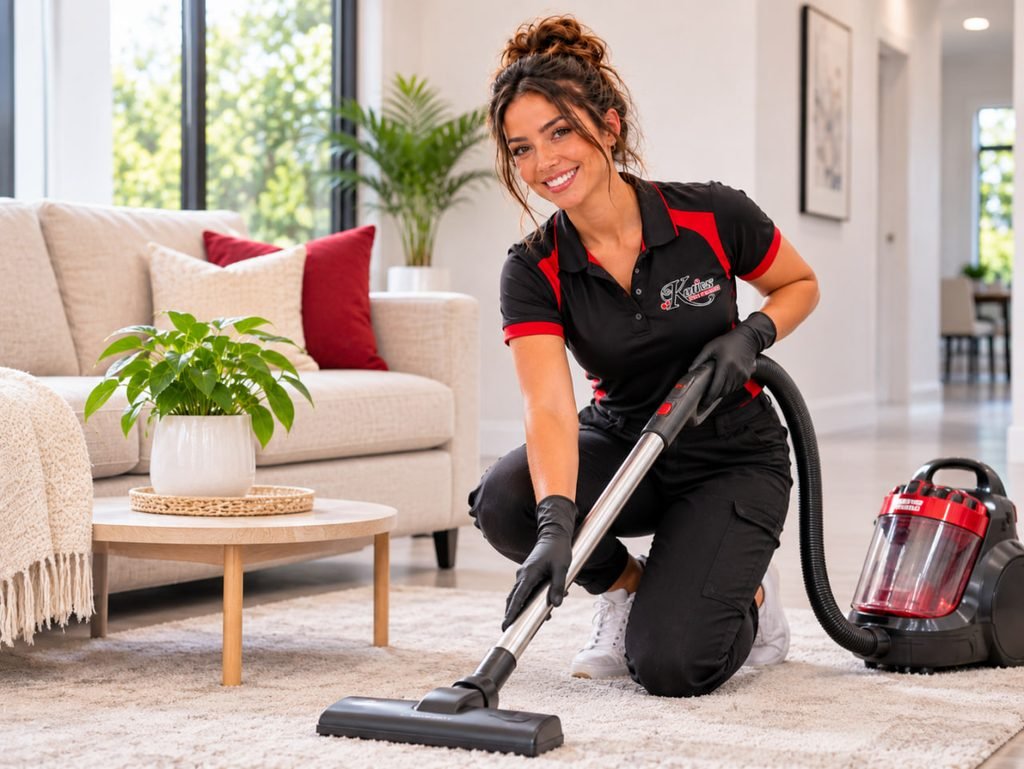
When you assess cleaning needs, look at how your home is used before counting rooms. A spare bedroom that stays closed is different from a teenager’s room used for studying and snacks. A bathroom used by one person may need a different maintenance pattern from a family bathroom used by several people throughout the day.
Number of occupants and shared facilities. More occupants can mean more cooking, showers, laundry and movement through common areas. It is not simply the number of people, though; shared spaces and everyday habits matter. Someone who cooks most meals at home may need more frequent kitchen attention than a larger household that rarely uses its oven.
Children, pets and visitors. Young children may bring toys and crumbs into living areas. Dogs can track outdoor material across entrance flooring, and visitors can add to the use of kitchens and toilets. Respond to what actually happens rather than assuming every pet or every child means the same cleaning schedule.
Work patterns and time at home. Working from home increases the use of desks, bathrooms and kitchen areas, but it may also make some small chores easier to fit into the day. Conversely, shift work, commuting and caring responsibilities can leave household members with little reliable time to tackle more substantial cleaning. The important issue is available capacity, not whether people are generally “busy”.
Flooring and finishes. Tiles, timber, laminate, carpet and treated stone have different care needs. A safe cleaning schedule respects the manufacturer’s instructions and how each surface is used. For instance, a floor that needs prompt attention to tracked-in grit should not be left until the next professional visit merely because a weekly service is booked.
Weather, entrances and outdoor activity. Tauranga and surrounding Bay of Plenty areas include coastal and inland living environments. An active household may carry sand, soil or rainwater through entrances, depending on its routines and conditions. The answer is to watch which areas collect dirt, not to assume that everyone in Papamoa, Mount Maunganui or Bethlehem experiences the same level of buildup.
Health and accessibility considerations. Some households have members who are more vulnerable to infection, have allergies or find certain cleaning tasks physically difficult. A professional cleaner may help with agreed ordinary cleaning, but specific infection-control measures, medical needs or hazardous conditions require appropriate advice and confirmation of capability. Routine house cleaning is not a substitute for healthcare guidance.
Budget and priorities. A realistic schedule considers what the household can comfortably afford and what the service includes. A smaller number of well-defined tasks performed at an appropriate frequency may be more useful than an ambitious package that does not address the areas causing concern. There is no verified standard Katie’s price that can be inferred from household size alone.
For people comparing house cleaning frequency Tauranga, a two-week observation can be helpful. Keep a brief note of the tasks that repeatedly fall behind, the surfaces that get visibly dirty first and the jobs you most dislike or struggle to complete. This gives you evidence for choosing between recurring appointments and a one-off service.
A room-by-room plan for keeping the home manageable
Cleaning schedules work best when everyday hygiene and professional assistance have clearly different roles. The following checklist is an adaptable planning tool, not a fixed set of inclusions from any cleaning company. It helps you distinguish frequent household tasks from jobs that may be discussed in an individual cleaning quote.
Kitchen and bathroom priorities
The kitchen needs attention whenever food is prepared. Wipe suitable benches after use, clean spills promptly, wash dishes and attend to sinks and frequently handled areas as needed. Handles and switches deserve routine attention because people touch them regularly. A professional visit may help with agreed kitchen surfaces and accessible areas, but it should never be the sole time a food-preparation surface is cleaned.
Bathrooms also need regular upkeep between visits. Toilets, basins, taps, shower surfaces and wet floors should be attended to as their condition requires. Keeping surfaces dry where practical, ventilating the room and dealing with leaks or persistent dampness can help manage problems that cleaning alone does not solve. Do not treat recurring mould as merely evidence that a cleaner should come more often; the source of moisture may need investigation.
If household members use several bathrooms, identify which one needs the most frequent professional attention. A rarely used guest toilet may not need the same work every visit. You can then ask the cleaner whether alternating some lower-priority tasks is practical within the agreed service. Do not assume that cupboard interiors, ovens, walls or specialist treatments are automatically included.
Floors, bedrooms and frequently touched surfaces
Entrance floors and walkways often show debris first. Remove grit and spills when you notice them and vacuum or mop using methods suitable for the material. A routine professional appointment may help maintain accessible floors, but tasks such as moving heavy furniture, deep carpet extraction or treating delicate finishes need separate discussion.
Bedrooms and living rooms usually benefit from dusting and floor care according to use. Bedding and laundry need their own household routine. Electronics and polished furniture may have special care instructions, so avoid assuming that a general cleaner can apply the same product everywhere. Make fragile possessions and restricted areas clear before a visit.
As Health New Zealand’s household hygiene guidance explains, high-touch surfaces such as door handles, light switches, taps and benchtops are useful cleaning priorities. Give those surfaces regular attention rather than waiting for an appointment date. Follow cleaning-product directions, avoid mixing chemicals and use suitable cloths so that dirty materials are not carried from a toilet to food-contact areas.
A practical division of labour might look like this:
- After use or when dirty: food preparation areas, spills, dishes and any obvious contamination.
- During the week: toilets, basins, busy floors, laundry-related tasks and frequently touched household surfaces, as needed.
- At an agreed professional visit: the selected routine cleaning tasks that will genuinely relieve the household workload.
- Occasionally, by separate agreement: more detailed cleaning of suitable neglected areas or a one-off deeper clean.
These are guidance categories, not rigid requirements for every home. People with specific health concerns should follow appropriate public-health or professional advice, and all products should be used according to their labels.
How to test a cleaning routine and know when to change it
Before committing to a permanent schedule, write down what you want to improve. “The house should feel easier to manage” is a good goal, but it becomes more useful when you specify the main bathroom, everyday floors and kitchen surfaces. This creates something you can actually review after a few appointments.
Try a short review cycle instead of guessing
For the first two to four weeks, note how quickly each priority area becomes difficult to manage. You do not need a detailed spreadsheet. A few observations will do: the hallway needs attention three days after it is cleaned, the bathroom feels manageable for a week, or the spare room rarely needs work. Use that information to decide what the professional visit should cover.
After the first appointment, check the completed work against the agreed scope rather than comparing it with an undefined idea of a “full clean”. Did the priority areas receive the attention requested? Were any surfaces inaccessible? Did someone need to tidy or move small items before cleaning could happen? Would a different sequence of tasks be more useful next time?
A fortnightly booking may initially seem convenient but prove unsuitable during school holidays or when caring responsibilities increase. Equally, weekly cleaning may no longer be necessary if fewer people are living in the home or household routines change. When you notice a consistent pattern, contact the provider to discuss whether scope or scheduling changes can be accommodated. Any change is subject to the business’s availability and quote conditions.
It is also worth distinguishing maintenance from a deeper reset. If the first professional appointment has to address substantial existing buildup, ask whether a separately quoted deep clean should come before regular maintenance. Once the heavier work is dealt with, the ongoing schedule can focus on keeping agreed spaces manageable. Do not expect every ordinary appointment to include both routine and extensive restorative cleaning.
Another useful signal is whether household members are still rushing to clean the entire home immediately before the cleaner arrives. Clearing accessible worktops and putting away personal belongings can be sensible preparation, but needing to complete all the cleaning yourself suggests the arrangement may not be meeting your original goal. Review priorities with the provider rather than silently carrying on.
For households searching house cleaning frequency Tauranga, this approach changes the question from “What is the correct interval?” to “What interval gives us a manageable home with the tasks we can realistically do ourselves?” That is a much better basis for a long-term decision.
Booking professional house cleaning in Tauranga: what to ask
A clear enquiry improves the chance of receiving a relevant quote. Start with the home’s location, property type, number of bathrooms and general condition. Then identify your main priorities and whether you want a one-off appointment or recurring support. If you are unsure about frequency, describe your situation and ask which appointment patterns the business can discuss.
Katie’s Elite Cleaning advertises regular home cleaning and more detailed property cleaning. Its existing guide to house cleaning services in Tauranga gives broader background on cleaning tasks and service choices. This article focuses more narrowly on choosing and reviewing a routine, rather than repeating that general service guide.
To prepare an enquiry, consider these details:
- Main problem: Which routine tasks are hard to keep up with, and how often do they become noticeable?
- Priority rooms: Is the main concern bathrooms, floors, kitchen surfaces or another area?
- Current condition: Is the home already maintained, or does it need a separate deeper clean before routine work begins?
- Timing preference: Would weekly, fortnightly or occasional support suit your household? Ask what the business actually has available.
- Access: Will someone be home, and are there pets, entry rules, delicate finishes or restricted rooms to discuss?
- Written scope: Which tasks, exclusions and changes should be confirmed before the appointment?
If you are planning cleaning outside central Tauranga, the Katie’s Elite Cleaning service-area guide outlines the communities the business discusses, including Papamoa, Mount Maunganui, Welcome Bay, Bethlehem, Pyes Pa, Te Puke and Katikati. Check the details of your specific booking rather than assuming the same appointment pattern is available in every location.
You can also view the company’s before-and-after cleaning examples to see the types of cleaning work it showcases. These examples illustrate outcomes from particular jobs; they do not establish what every routine appointment includes or guarantee the same result on a different surface.
An example enquiry might be: “We have a three-bedroom Tauranga home with two regularly used bathrooms and a dog. We manage dishes and kitchen benches daily but struggle to keep up with bathrooms and floors. Could you quote for regular cleaning and let us know whether a weekly or fortnightly arrangement is possible?” This is an illustrative message, not a real customer account.
Before accepting a quote, check the tasks and appointment arrangements in writing. Katie’s published terms say quotations are based on the information available at the time and that changes to the requested scope may result in extra charges. If your priorities, property condition or access change, tell the team before the appointment so there is no confusion about what was agreed.
Ultimately, house cleaning frequency Tauranga is less about following a universal timetable and more about finding an arrangement that suits the way your home is actually used. Start with a schedule you can afford, keep up with essential daily hygiene, assess the results and adjust your plan when circumstances change.
Request a free quote: To discuss residential cleaning, visit Katie’s Elite Cleaning and select Get a Quote, phone +64 27 281 7100, or email admin@katieselitecleaning.co.nz. Describe the rooms, cleaning priorities, current condition and preferred frequency so the team can discuss suitable options and confirm availability.
Frequently Asked Questions
1. How often should a busy Tauranga family book a professional cleaner?
There is no fixed interval that suits every family. Weekly visits may be helpful when several people use shared bathrooms and floors heavily, while fortnightly cleaning may suit a household that manages daily tasks itself. Consider the amount of work building up between visits and confirm suitable scheduling directly with the provider.
2. Is weekly house cleaning better than fortnightly cleaning?
Neither option is automatically better. Weekly help may reduce the buildup of routine work in a high-use home, while a fortnightly visit may be sufficient when residents regularly clean their own kitchen, bathrooms and floors. The agreed task list matters just as much as how often the cleaner attends.
3. Can I book monthly cleaning and leave everything until the appointment?
No. Monthly professional cleaning should supplement ordinary household care, not replace it. Kitchen surfaces need cleaning after food preparation, spills require prompt attention and bathrooms and frequently touched surfaces need cleaning as often as their use and condition require. A monthly visit may still be useful for additional agreed tasks.
4. Do homes with pets need more frequent cleaning?
They sometimes do, especially where fur or tracked-in dirt builds up quickly. But it depends on the animal, the flooring and the household’s habits. Look at the areas your pet actually uses, remove debris promptly and decide whether an extra professional visit or a different floor-care priority would help.
5. What changes if someone in the household is unwell?
Follow relevant health guidance rather than relying on a normal cleaning appointment. Health New Zealand recommends regularly cleaning frequently touched surfaces, using suitable products and following instructions. Illness may call for additional care, and a routine domestic cleaning booking should not be assumed to include specialist infection-control services.
6. Should I book a deep clean before regular house cleaning?
That may be worthwhile when there is substantial existing residue or neglected cleaning work that ordinary maintenance would not address. Describe the condition of the property and ask the company whether a separate deep-clean quote is appropriate. Once the agreed heavier work is complete, ongoing visits can focus on routine upkeep.
7. Which rooms should I prioritise on a limited cleaning budget?
Start with the spaces that are used most and that you find hardest to maintain, often a main bathroom, kitchen or busy floor areas. Keep essential everyday hygiene tasks in your household routine. Ask the cleaner whether the agreed scope can focus on specific rooms rather than assuming every visit must cover the entire home.
8. Do Tauranga’s coastal conditions mean every house needs weekly cleaning?
No. Outdoor conditions and household activity can affect the amount of debris brought inside, but property location alone does not determine a cleaning frequency. Observe entrances, floors and frequently used rooms, then choose a routine based on actual buildup and the time available to deal with it.
9. Can I change my cleaning frequency after booking?
You can ask the business to review the arrangement if your needs change. A different frequency, extra work or a revised appointment depends on availability and any agreed quotation or scheduling conditions. Explain what has changed and request confirmation rather than assuming a new visit pattern will automatically be available.
10. How do I request a regular house cleaning quote from Katie’s Elite Cleaning?
Visit katieselitecleaning.co.nz, select the free-quote option, and describe your location, rooms, cleaning priorities, property condition and preferred schedule. You can also phone +64 27 281 7100 or email admin@katieselitecleaning.co.nz. The company can discuss a suitable scope and confirm appointment arrangements.