
Cleaning schedule for families with children: Practical Guide

A practical cleaning schedule for families with children starts with small daily resets, not an exhausting list of chores. Keep food-preparation areas and bathrooms hygienic, give shoes and school bags a place to land, and share simple tidying jobs that suit each child’s abilities. Then set aside a few weekly blocks for floors, laundry and neglected corners. The best plan fits real mornings, after-school activities and family energy not an idealised spotless house.
Build the plan around your family’s actual week
A family home is used differently at 7.30 am on a school day, after sports practice and on a quiet Sunday. That matters more than the number of bedrooms when you decide what needs attention. Start with a typical week: note when people leave, when meals happen, which rooms get crowded and which jobs tend to be forgotten. You are not assessing whether anyone is doing enough. You are looking for a repeatable system that removes friction from daily life.
Separate tidying, routine cleaning and occasional detailed work. Tidying returns books, toys and shoes to their places. Routine cleaning removes dirt from suitable surfaces, deals with toilets and basins, and attends to floors as needed. Detailed work might involve accumulated residue or areas that are hard to reach and should be considered separately. These categories make responsibilities clearer: a child can put toys in a basket without being asked to use cleaning chemicals.
Choose two or three household priorities rather than attempting every room every day. For many homes, a safe kitchen, a usable bathroom and clear walking routes matter more than a perfectly arranged spare room. If your children regularly lose their school items, a five-minute entrance reset may save more family stress than another round of decorative dusting. The goal is a home that works for its occupants, not one that looks ready for a property advertisement.
A useful way to begin is a seven-day observation. Make a quick note when an everyday task causes a bottleneck: dishes are still out when breakfast starts, wet towels remain on the floor, or children’s uniforms cannot be found. Then assign a small action to the time when that problem appears. A timetable based on these real obstacles is more likely to be followed than a long printable checklist written without reference to your household.
Think about the adults’ capacity as well. Shift work, care responsibilities, health needs and long commutes change what is possible. Sharing household work fairly may involve adults taking different tasks on different days. It may also mean that one adult supervises a child while the other cleans. A family schedule is successful when it reduces conflict and repeated reminders, not when it creates another unpaid management job for one person.
Create simple morning, after-school and evening resets
The most useful family chores happen near an activity that already exists. Rather than asking everyone to remember a general instruction such as “keep the house tidy”, connect each job to breakfast, coming home or getting ready for bed. A reset can take only a few minutes; it does not need to cover the whole property. Consistency matters more than an impressive cleaning marathon.
Before school: protect the busiest ten minutes
School mornings often involve lunches, drink bottles, footwear and people needing the same space at once. The priority is a clear route out of the house and a kitchen ready for the next use. Put a labelled basket or hook near the entry for each child’s things. Encourage everyone to bring dishes to the kitchen after breakfast, while an adult deals with food-contact surfaces and any spills. Keep bags off walkways where they may become a trip hazard.
Prepare what you can the previous evening. That might mean packing non-perishable school items, placing uniforms in one location and checking the washing schedule. On an especially rushed morning, focus on tasks that cannot safely wait: food handling, spills and removing obstacles. A breakfast bench does not need to be polished to perfection before the school run. Building flexibility into a cleaning schedule for families with children makes it more useful on ordinary weekdays.
After school and before bed: reset what was used
Children often return with jackets, lunchboxes, sports gear, artwork and shoes. Make unpacking a predictable step before everyone heads into other activities. Lunchboxes go to the kitchen, wet items go to a suitable drying place, and bags return to their hooks. Adults can check for food scraps and deal with dirty dishes; children can help by placing belongings where they belong. This short reset stops the entryway from becoming a storage pile by Thursday.
After dinner, divide the jobs into two streams. One adult or capable household member clears and tidies the dining area while another attends to the kitchen surfaces and dishes. A child can carry their own unbreakable plate with supervision if appropriate. Later, each bedroom can have a two-minute toy-and-book return. Leave enough time for bedtime routines; tired children rarely respond well to a sudden twenty-item checklist.
Use a simple visual routine for younger children. Three pictures—bag away, toys in basket, books on shelf—may be more effective than written instructions. Older children may prefer a short shared note or calendar reminder. Avoid turning missed tasks into a moral judgement. When the system fails repeatedly, simplify the number of actions or change where the supplies and storage are located.
Share child-friendly responsibilities while keeping cleaning products secure
Age-appropriate participation can help children learn where things belong and understand shared household responsibilities. It should never require them to handle hazardous substances or attempt tasks beyond their judgement and ability. Every child develops differently, so use the examples below as possible starting points rather than rigid age-based rules. Adults remain responsible for hygiene, safety and checking the finished work.
Match the job to the child’s abilities, not a fixed age
Young children may be able to return soft toys to a low basket, sort a few safe items or help place books on a shelf with supervision. Primary-school-aged children may be able to put laundry in a hamper, organise shoes, clear unbreakable items or wipe a table with a water-damp cloth under an adult’s direction. Older children may take responsibility for keeping their own floor clear, sorting washing or vacuuming a safe area after being shown how to use the equipment.
The key is to teach one task at a time. Explain where the items go, demonstrate the action and check whether it was manageable. A child who struggles to remember five steps may succeed with one clear job after dinner. If several children share a space, rotate simple tidying responsibilities rather than assuming the eldest should always take charge. Revisit the arrangement when school schedules, needs or interests change.
Keep actual cleaning chemicals under adult control. Health New Zealand advises storing household cleaners away from children in locked cupboards or cupboards with safety catches. The New Zealand Environmental Protection Authority advises following label directions and keeping hazardous products away from children. Never leave an open bottle unattended, decant cleaners into drink containers or mix products. Even child-resistant packaging is not a substitute for secure storage. Children can contribute meaningfully without using disinfectants, bleach, oven cleaners or other chemicals.
The difference between helping and being exposed to chemicals should remain clear in every room. If adults are cleaning with sprays or stronger products, keep children away from the work area as necessary and follow the label’s ventilation and safety instructions. Tools and appliances may also present risks: consider electrical cords, slippery wet floors, sharp objects, heavy buckets and the child’s ability to follow directions. When in doubt, give the child a safe organising task elsewhere.
A shared responsibility chart need not be a reward competition. It can simply answer three questions: who owns the task, when does it happen, and what does finished look like? “Put your shoes on the rack after school” is measurable. “Keep the entire house clean” is not. Praise helpful participation, revise unclear instructions and recognise that family routines will sometimes be interrupted by illness or unexpected events.
Focus on kitchen, bathroom, toy and high-traffic areas
A cleaning schedule for families with children needs to distinguish visible mess from hygiene. Toys scattered across a bedroom may look untidy but do not create the same immediate concern as a contaminated food-preparation surface. On a difficult day, attend first to spills, toilets, food-handling areas and anything that could create an avoidable hazard. Return decorative organising jobs to the next suitable moment.
Clean high-touch surfaces without overcomplicating the routine
Health New Zealand recommends regular cleaning of frequently touched household surfaces as part of reducing the spread of illness. In a family home, this can mean door handles, taps, light switches and areas children touch repeatedly. How often to clean depends on use and whether anyone is unwell. Follow any applicable health advice and manufacturer instructions; routine household cleaning is not a substitute for specialist infection control when that is needed.
The kitchen deserves attention after food preparation, especially where raw food, crumbs or spills are involved. Clean appropriate surfaces and use suitable cloths or cleaning methods so contamination is not carried between areas. Keep bathroom cloths separate from those used around food. Children can place lunchboxes in the kitchen, but adults should supervise any task involving food safety, toilets, disinfectants or equipment.
For bathrooms, aim for usable, hygienic fixtures rather than an unrealistic daily deep clean. Attend to the toilet, basin and wet surfaces as their condition requires. Make sure towels can dry appropriately and respond to leaks or persistent dampness rather than treating recurring moisture as purely a cleaning issue. A busy family may need brief checks during the week and a more substantial bathroom clean at a planned time.
Toy management works best with fewer storage decisions. Low baskets for frequently used toys, a separate location for art supplies and a clear place for books reduce the number of prompts needed. Inspect and clean toys according to their material and how they are used, especially items that are mouthed or visibly soiled. Avoid soaking electronics or applying inappropriate household chemicals to children’s belongings.
Entrances and shared floors should be cleaned according to what comes inside. Shoes, sports equipment, wet weather gear, sand or garden dirt may leave visible debris; deal with it rather than waiting for a particular calendar square. Tauranga and surrounding areas include coastal and inland homes, but the amount of grit entering any particular house depends on its occupants’ routines, not simply its suburb. Protect sensitive flooring by following the material’s care instructions.
Bedrooms can be managed with a clear-floor rule and a small number of storage spots. Make the bed if that helps the morning routine, but do not let bedding presentation displace laundry, rubbish or safety concerns. Ask children to identify what belongs on the floor and what needs adult help. A brief reset before lights-out is usually more manageable than expecting an entirely rearranged room every evening.
Use a weekly family cleaning table, with room for disruption
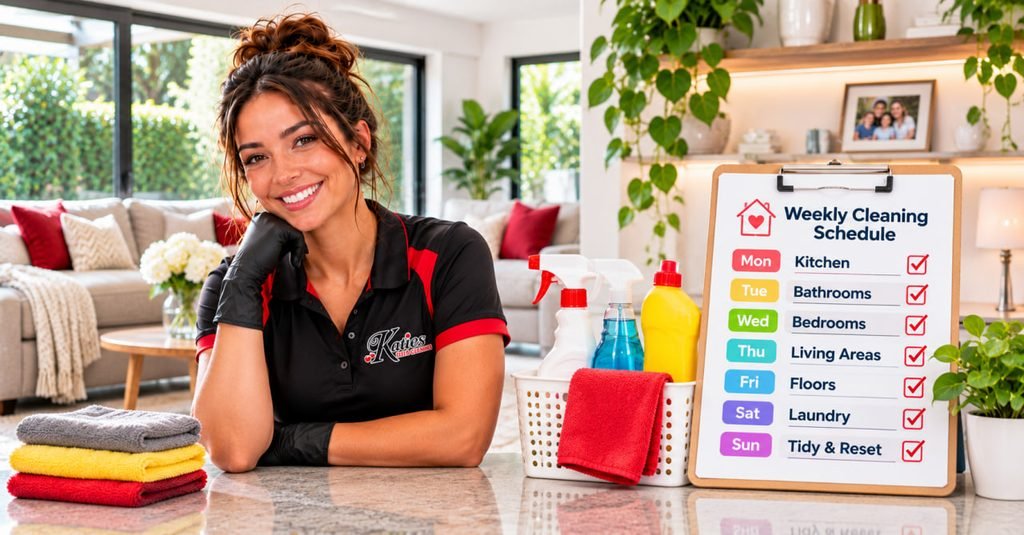
The purpose of a weekly plan is to distribute larger jobs so they do not all land on Saturday. You can move the days around to suit shifts, after-school activities and family commitments. The suggestions below are household actions, not inclusions promised by a professional cleaning service. They are also not fixed health requirements; clean immediately when spills or other hygiene issues demand it.
| Day | Suggested household focus | Child-friendly contribution | Adult responsibility |
|---|---|---|---|
| Monday | Entryway and school-gear reset | Return shoes and bags | Clear hazards and deal with tracked-in dirt |
| Tuesday | Bathroom check | Place personal items in storage | Clean suitable fixtures and high-touch surfaces |
| Wednesday | Laundry and bedroom floors | Sort own clothes into hampers | Run laundry and clean floors as needed |
| Thursday | Living room and toy storage | Return books and toys | Dust suitable surfaces and remove debris |
| Friday | Kitchen reset before the weekend | Return safe items to cupboards | Clean benches, sink and relevant appliances |
| Saturday | One agreed larger task | Help organise a safe area | Vacuum, mop or attend to a neglected task |
| Sunday | Prepare for the next school week | Pack appropriate school belongings | Check schedules, supplies and any unfinished essentials |
A table only helps if the work fits into your actual week. If Tuesday is occupied by swimming lessons, move the bathroom check. If Friday is a late-shift day, do the kitchen reset earlier or divide it into two small tasks. Decide which jobs are genuinely non-negotiable for safety and hygiene and which can be postponed without creating a problem. Flexibility is part of a realistic cleaning schedule for families with children, not evidence that the plan has failed.
A useful fallback is a ten-minute whole-house reset. Set a short period for everyone to return loose belongings, put rubbish in bins, clear walking routes and bring dishes into the kitchen. Then adults handle any necessary cleaning of food-contact or bathroom surfaces. This is not a replacement for ordinary hygiene; it is a way to stop general clutter from growing when a day has been disrupted.
Build a separate, occasional list for work that does not need to be forced into the same seven days: checking under furniture where safe, reassessing toy storage, reviewing laundry supplies or discussing a deeper clean for suitable surfaces that have fallen behind. Keep that list short enough to be useful. If every optional job becomes compulsory, the weekly plan soon becomes another source of pressure.
Families with babies or toddlers may have a completely different pattern from families with teenagers. Nappy-related cleaning, mouthing of toys and frequent spills can demand immediate adult attention, while older children may create more sports laundry and shared-bathroom use. Review the plan after changes in childcare, school timetables or household circumstances. What was practical in winter may not suit the summer holidays.
You can also consider a visible responsibility board that does not display private family information to visitors or service providers. A fridge note with tasks is often sufficient. If the same job is missed three times, examine whether the reminder comes at the wrong time, the supplies are inaccessible or the task is too broadly defined. Improve the system rather than continually adding reminders.
Decide when professional residential cleaning can take pressure off
Professional cleaning may be useful when the adults can keep up with urgent hygiene but cannot consistently finish the larger routine tasks. For example, daily dishes and lunchboxes may be under control while bathroom surfaces, accessible floors and dusting repeatedly fall behind. That is a good reason to discuss the scope of a recurring residential clean rather than making a family timetable longer and longer.
Katie’s Elite Cleaning advertises regular home cleaning and more detailed cleaning services for homes and properties in Tauranga and surrounding areas. Its website describes kitchen and bathroom cleaning along with floor and surface care, subject to the individual job and quotation. It does not establish a universal package for families with children or guarantee a particular appointment frequency, so explain the work you want rather than assuming a list of inclusions.
Before enquiring, decide what the household will continue to handle itself. Food preparation surfaces, spills, urgent mess and basic daily care cannot sensibly be deferred until a professional visit. A cleaner might instead be asked to discuss accessible bathrooms, selected floors and suitable surfaces. If a home has substantial accumulated grime, the company can advise whether a separately scoped deep-clean enquiry is more appropriate. Neither cleaning service replaces childcare or supervision.
When requesting a quote, share the home type, number of bathrooms, current condition, accessible rooms and the priorities that make the biggest difference. Mention pets, delicate finishes, restricted areas or access arrangements where relevant. Keep personal information about children out of public enquiries; a private quotation request generally needs information about the property and cleaning tasks, not a family’s school or daily movements.
A helpful example message would be: “We are a family in Tauranga with two children. We keep up with meals and daily tidying, but the main bathroom and floors are difficult to manage. Could you quote for those areas and advise what appointment options are available?” This is an illustrative enquiry, not a genuine customer testimonial or evidence of a completed job.
For local coverage, refer to the service-area directory and confirm the specific address with the team. Katie’s service areas include Tauranga, Papamoa, Mount Maunganui, Welcome Bay, Bethlehem, Pyes Pa, Te Puke and Katikati, although appointment arrangements can differ. You can also consult the existing house cleaning services guide for Tauranga for a broader explanation of service types. This article focuses on family routines and safe participation rather than repeating general cleaning-frequency advice.
Use the first few weeks of your plan as a trial. Are morning exits calmer? Are the important surfaces being cleaned when needed? Does each person know their small responsibility? Are the adults spending less time sorting repeated clutter? Adjust one or two things before rewriting everything. A sensible cleaning schedule for families with children should make the home easier to live in, even when a school day goes off-plan.
Request a free quote: If your household would benefit from help with agreed residential cleaning tasks, visit Katie’s Elite Cleaning and select Get a Quote. You can also call +64 27 281 7100 or email admin@katieselitecleaning.co.nz. Describe the rooms, cleaning priorities, property condition and preferred timing so the team can discuss a suitable quotation and actual availability.
Frequently Asked Questions
1. What is a realistic cleaning schedule for families with children?
Start with brief daily resets after breakfast, after school and before bed, then distribute larger jobs across the week. Keep food-contact surfaces and toilets hygienic according to use rather than waiting for a scheduled day. Choose only a few priorities at first, and revise them when school activities, working hours or the children’s abilities change.
2. How do I fit cleaning around a busy school morning?
Prepare school supplies where practical the night before, assign one place for bags and shoes, and keep breakfast cleanup simple. Children can bring suitable dishes to the kitchen and put their belongings away. Adults should attend to food preparation areas, spills and obstacles. Save non-urgent organising tasks for a quieter time rather than trying to clean every room before school.
3. What chores can young children safely help with?
Young children may help return books, soft toys and safe belongings to accessible storage with supervision. Older children may take on more organising or suitable equipment-based jobs when they can do so safely. Do not ask children to handle household chemicals, heavy buckets, sharp objects or electrical appliances beyond their capability. Adults remain responsible for safety and hygiene.
4. Should toys be cleaned every day?
It depends on how the toys are used, their material, whether they are visibly dirty and whether children put them in their mouths. Clean contaminated or soiled items promptly and follow appropriate care instructions. Daily toy tidying and toy cleaning are different jobs. Avoid damaging toys with unsuitable liquids or products, and take extra care when someone in the household is unwell.
5. What should parents prioritise when there is only ten minutes available?
Address immediate hygiene and safety first, including spills, food-preparation surfaces and obstacles in walkways. Then ask everyone who can participate to return a small number of belongings to their usual places. A brief reset cannot replace necessary bathroom or kitchen cleaning, but it can prevent ordinary clutter from becoming a bigger task the next day.
6. How can siblings share chores fairly?
Give each child a clear responsibility suited to their abilities rather than relying on identical tasks or always asking the oldest child. Rotate simple tidying work when practical, demonstrate what finished looks like and adjust tasks when school demands change. Adults should continue handling tasks that require hazardous products, careful hygiene or greater physical strength and judgement.
7. How do I keep cleaning products safe around children?
Keep products in their original labelled containers and store them securely away from children, preferably in locked cupboards or cupboards with safety catches. Follow label instructions, never mix cleaning chemicals and do not leave open products unattended. If a child may have been exposed to a poison, contact New Zealand’s National Poisons Centre on 0800 764 766 for advice.
8. Is a daily cleaning checklist enough for a family home?
A daily checklist helps with short tasks, but it should be supported by a flexible weekly plan for floors, laundry, bathroom care and other jobs according to their condition. Some cleaning is needed immediately, regardless of the schedule. Keep the daily list manageable; otherwise, people may stop using it altogether or spend more time managing the checklist than cleaning.
9. When should a family consider professional house cleaning?
Consider discussing professional help when adults can manage day-to-day hygiene but repeatedly struggle with larger routine tasks such as accessible floors or bathrooms. Provide the property details and ask about an agreed scope and available appointments. Professional cleaners do not replace the household’s daily responsibilities or provide childcare. Existing heavy buildup may need a separate deep-clean assessment.
10. How do Tauranga families request a quote from Katie’s Elite Cleaning?
Visit katieselitecleaning.co.nz and choose Get a Quote, or contact the business on +64 27 281 7100 or admin@katieselitecleaning.co.nz. Explain the property location, room priorities, current condition, preferred timing and access details. The business can discuss suitable cleaning services and confirm the actual quotation and appointment availability.