Cleaning high touch surfaces at home: High-Touch Surface Tips

Cleaning high touch surfaces at home involves regularly wiping commonly handled items such as door handles, light switches, taps, appliance handles and remote controls using suitable cleaning methods. Most households do not need to disinfect every surface repeatedly throughout the day. Instead, focus on frequently used areas, visible dirt, food preparation surfaces and specific circumstances that require additional attention. A practical routine helps maintain a well-kept home without excessive chemical use, unnecessary cleaning or damage to household materials.
Why Cleaning High Touch Surfaces at Home Deserves Attention
Household cleaning often focuses on visible areas such as floors, kitchen benchtops, bathrooms and furniture. However, smaller surfaces that household members handle repeatedly can easily be overlooked.
Door handles, cupboard handles, light switches and taps may receive frequent contact throughout the day without being included in a regular cleaning routine.
These surfaces can accumulate fingerprints, skin oils, dust, food residue and other everyday contaminants. Depending on household activities, they may become visibly marked or sticky over time.
Cleaning high touch surfaces at home is therefore a useful part of general residential maintenance.
However, frequent contact does not automatically mean that a surface presents a significant health risk. The appropriate cleaning method depends on how the surface is used, its material, its condition and the circumstances within the household.
A door handle used by several family members may benefit from regular wiping. A kitchen handle touched while preparing raw food may require more immediate attention because of potential food contamination.
Similarly, a light switch in an occasionally used spare bedroom may not require the same cleaning frequency as a bathroom tap used throughout the day.
Understanding these differences allows homeowners to establish a sensible routine rather than treating every household surface as equally important.
What Are High-Touch Surfaces?
High-touch surfaces are objects, fixtures or areas that people handle frequently during everyday activities.
They are not necessarily large surfaces or areas where visible dirt accumulates quickly.
Common examples include:
- Internal and external door handles.
- Light switches.
- Kitchen cupboard handles.
- Refrigerator and freezer handles.
- Microwave controls.
- Bathroom taps.
- Toilet flush buttons.
- Stair handrails.
- Television remote controls.
- Computer keyboards and computer mice.
- Dining chair backs.
- Frequently used drawer handles.
- Washing machine controls.
- Shared household touchscreens.
The surfaces that deserve the most attention differ between households.
A family with young children may frequently use stair handrails, cupboard handles and shared bathroom fixtures. A person working from home may regularly handle office equipment, desk accessories and kitchen appliances.
A household with elderly occupants may make greater use of handrails and other supportive fixtures.
When cleaning high touch surfaces at home, consider actual household behaviour rather than relying exclusively on a generic checklist.
This approach makes routine cleaning more relevant to your property and avoids spending unnecessary time on rarely used areas.
Identifying the Most Frequently Touched Surfaces in Each Room
A room-by-room assessment is a useful way to establish which household surfaces require regular attention.
Rather than cleaning every object with the same frequency, identify areas that receive repeated contact and those that are exposed to food, moisture or visible residue.
Kitchen Handles, Taps and Appliance Controls
Kitchens contain numerous surfaces that people touch while preparing meals, storing groceries and washing dishes.
Some of these surfaces may receive contact before household members have washed their hands.
Examples include refrigerator handles, cupboard doors, taps, microwave controls and appliance buttons.
When cleaning high touch surfaces at home, the kitchen deserves particular consideration because everyday cleaning and food safety responsibilities can overlap.
A practical kitchen checklist includes:
- Refrigerator and freezer handles.
- Cupboard and drawer handles.
- Kitchen taps and sink controls.
- Microwave buttons and handles.
- Oven and stovetop controls.
- Dishwasher handles.
- Frequently used benchtop appliances.
- Dining table surfaces.
- Rubbish bin lids and handles.
- Pantry door handles.
Pay attention to visible grease, food residue and fingerprints, particularly around handles located near cooking areas.
A cupboard handle beside the stovetop may accumulate residue more quickly than a handle in an unused storage cupboard.
Food preparation surfaces require additional consideration because they can come into direct contact with ingredients.
New Zealand’s Ministry for Primary Industries provides official food safety guidance for preparing and storing food at home.
Its guidance includes choosing products intended for food preparation surfaces and following the relevant application, rinsing and drying instructions.
This is particularly important after handling raw meat or poultry. Clean affected utensils, surfaces and handles appropriately before preparing other food.
Avoid using a bathroom cleaning cloth on kitchen surfaces, even if the cloth appears visually clean.
Bathroom Fixtures, Toilets and Laundry Controls
Bathrooms contain frequently handled fixtures that are regularly exposed to moisture and personal care products.
Fingerprints, soap residue, toothpaste splashes and watermarks can accumulate around taps, handles and accessible fittings.
Important bathroom surfaces include:
- Bathroom door handles.
- Basin taps.
- Shower controls.
- Toilet seats and flush buttons.
- Vanity handles.
- Light switches.
- Towel rail areas that are frequently handled.
- Shower door handles.
- Frequently used storage handles.
The toilet and surrounding surfaces should be cleaned using appropriate products and separate cleaning materials.
When cleaning high touch surfaces at home, avoid transferring the same cloth between toilets, bathroom basins and kitchen food preparation areas.
Laundry rooms also contain frequently used controls and handles.
Depending on household activities, washing machine buttons, dryer handles, laundry taps and cupboard handles may benefit from periodic cleaning.
Check appliance instructions before applying moisture or cleaning products around electronic control panels.
If you notice damaged fittings, deteriorating seals or persistent moisture-related problems, remember that cleaning may not resolve the underlying issue. Repairs or appropriate property maintenance may be necessary.
Shared Living Areas, Entrances and Home Offices
Frequently handled surfaces are not limited to kitchens and bathrooms.
Shared living spaces often contain items used by multiple household members throughout the day.
Common examples include:
- Television remote controls.
- Light switches.
- Internal door handles.
- Stair handrails.
- Dining chair backs.
- Frequently handled furniture surfaces.
- Window handles.
- Shared charging accessories.
- Home office equipment.
- Entryway cupboard handles.
Front door handles may require additional attention if they are regularly exposed to outdoor dirt, moisture or salt residue.
In coastal communities such as Papamoa and Mount Maunganui, properties exposed to coastal conditions may experience residue on certain external fittings. The extent of this will depend on the property’s location and exposure.
Use cleaning methods suitable for the particular metal, coating or surface finish.
Computer keyboards, remote controls and other electronic equipment require more care than ordinary furniture surfaces.
Follow manufacturer instructions and avoid spraying cleaning liquids directly onto electrical devices.
Cleaning high touch surfaces at home becomes easier when these objects are included in a practical room-by-room assessment.
The following comparison can help establish suitable priorities.
| Household area | Commonly handled surfaces | Suggested attention |
|---|---|---|
| Kitchen | Taps, appliance handles and cupboard handles | Regularly and after relevant food contamination |
| Bathroom | Taps, toilet controls and door handles | Regularly, according to use |
| Entrance | Front door handles and frequently used fittings | When visibly marked or during routine cleaning |
| Living room | Remote controls and light switches | According to household use |
| Stairways | Handrails and frequently handled supports | Regularly if heavily used |
| Home office | Keyboard, mouse and desk accessories | According to use and equipment instructions |
| Laundry | Appliance controls and cupboard handles | As needed during maintenance |
| Spare bedroom | Door handles and switches | Periodically or after use |
These are practical starting points rather than mandatory cleaning frequencies.
Cleaning Versus Disinfecting: Choosing a Sensible Approach
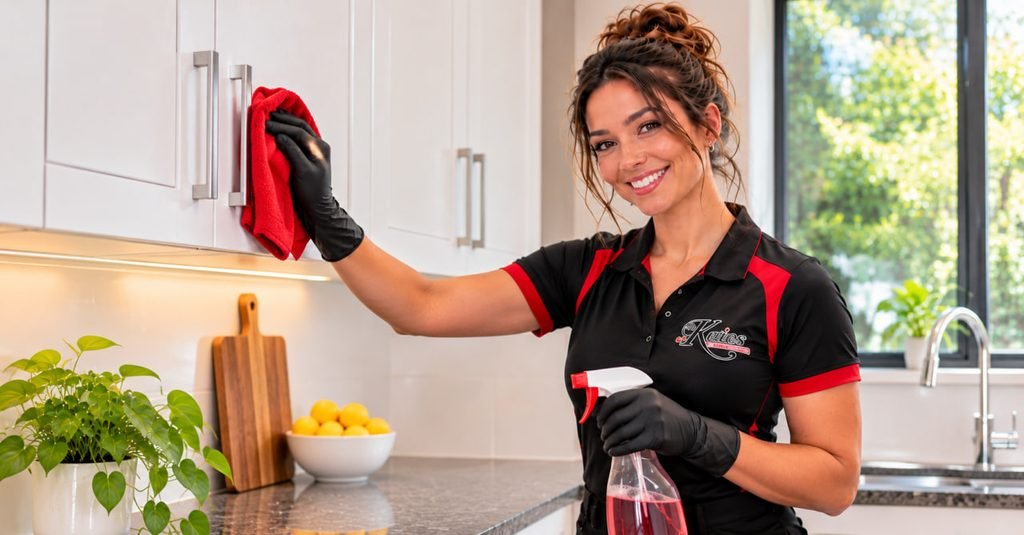
One of the most important considerations when cleaning high touch surfaces at home is understanding the difference between ordinary cleaning, sanitising and disinfecting.
These terms are sometimes used interchangeably, but they describe different processes.
Using a product marketed as a disinfectant does not automatically mean that every household surface requires disinfection.
Similarly, a surface that looks clean should not automatically be described as germ-free.
Understand What Different Cleaning Processes Achieve
Ordinary cleaning involves removing visible dirt, grease, residue and other unwanted material from a surface.
Depending on the method used, cleaning can also remove some microorganisms. However, general household cleaning should not be represented as sterilisation or guaranteed elimination of harmful microorganisms.
Sanitising involves reducing microorganisms to a level considered appropriate for the intended application. It is particularly relevant in certain food preparation situations.
Disinfecting involves using an appropriate process or product to inactivate or destroy specified microorganisms under the conditions described by the product manufacturer.
The effectiveness of a disinfectant depends on factors such as:
- The suitability of the product.
- The type of microorganism involved.
- The condition of the surface.
- Whether preliminary cleaning is required.
- Correct preparation or dilution.
- The required contact time.
- The application method.
Simply spraying a surface and immediately wiping it dry may not achieve the disinfecting performance described on a product label.
Similarly, using a larger amount of a cleaning chemical does not necessarily produce a better result.
| Process | Main purpose | Typical household application |
|---|---|---|
| Cleaning | Remove dirt, grease and residue | Routine household maintenance |
| Sanitising | Reduce microorganisms according to the intended application | Appropriate food preparation surfaces |
| Disinfecting | Target specified microorganisms under defined conditions | Particular contamination or illness-related circumstances |
| Sterilisation | Eliminate viable microorganisms through specialised processes | Not normally part of routine residential cleaning |
For ordinary household maintenance, suitable cleaning products and appropriate wiping methods are generally a practical starting point.
Additional sanitising or disinfecting may be appropriate in particular circumstances, such as food contamination or certain household illnesses.
When illness is involved, follow relevant public health or healthcare guidance rather than assuming that a general household cleaning product is suitable for every situation.
Cleaning high touch surfaces at home should be based on practical needs rather than the expectation that an occupied residential property can remain completely free from microorganisms.
Why more cleaning chemicals do not necessarily mean better cleaning
Using unnecessary quantities of cleaning products can leave residue, create strong odours and potentially damage certain household finishes.
Repeated application of unsuitable chemicals may affect painted surfaces, coated metals, natural stone, plastics or electronic equipment.
Excess moisture can also damage materials that are not designed to tolerate repeated wet cleaning.
New Zealand’s National Poisons Centre household poisoning guidance warns against mixing bleach with other household cleaners because dangerous chemical reactions may occur.
Always use cleaning products according to their labels, keep them in appropriate containers and store them securely away from children and pets.
Where protective equipment or ventilation is required, follow the manufacturer’s instructions.
A straightforward cleaning routine using suitable products is generally more manageable than repeatedly applying multiple chemicals to the same surface.
Practical Methods for Cleaning High Touch Surfaces at Home
A good cleaning routine should remove unwanted residue while respecting household materials and equipment.
Start by identifying the surface type and selecting an appropriate cleaning method.
For many ordinary washable household surfaces, a clean cloth and a compatible cleaning product can provide effective routine maintenance.
However, the same method should not automatically be used for every fixture, electronic device or decorative finish.
Step 1: Identify the material before cleaning
Door handles, switches and fittings may be made from different materials.
Examples include:
- Stainless steel.
- Brass.
- Chrome-plated metal.
- Painted timber.
- Powder-coated aluminium.
- Plastic.
- Laminated materials.
- Natural stone.
- Glass.
Some materials tolerate damp wiping, while others require specialised care.
If you are unsure about a product’s suitability, check the manufacturer’s care instructions and test an inconspicuous area where appropriate.
Do not assume that a product suitable for one metal or finish will be appropriate for another.
Step 2: Remove visible dirt and residue
Check the surface for dust, fingerprints, grease or other visible marks.
Use an appropriate cloth and cleaning method to remove ordinary dirt.
Handles and fittings may require attention around edges or recessed areas where residue can accumulate.
Avoid excessive pressure, particularly on painted, polished or coated surfaces.
Abrasive pads and harsh scrubbing can leave permanent marks on some materials.
Step 3: Use a suitable cleaning product
Select a product appropriate for the surface and the intended cleaning task.
Follow instructions concerning application, dilution, rinsing, contact time and protective equipment.
For surfaces near food, ensure the product is suitable for that application.
Do not combine cleaning products or attempt to increase their strength beyond the manufacturer’s instructions.
For electrical switches and electronic equipment, follow applicable manufacturer guidance and avoid allowing moisture to enter electrical components.
Step 4: Use clean cloths and avoid transferring dirt
Cleaning with a cloth that has already collected substantial dirt may transfer residue to another surface.
Replace or wash cleaning cloths as appropriate.
A simple household arrangement may involve separate cloths for:
- Kitchen surfaces.
- Bathroom basins and fixtures.
- Toilets.
- General furniture and handles.
- Electronic equipment, where appropriate.
Colour-coded cloths can help household members distinguish between different cleaning areas.
For example, you might reserve one colour for kitchen cleaning and another for bathrooms.
There is no universal household colour-coding system that must be followed. The important consideration is consistently separating cleaning materials where appropriate.
Step 5: Check the surface after cleaning
Inspect the area for remaining marks, excess moisture or cleaning product residue.
Where the product instructions require rinsing, complete that step.
Allow the surface to dry appropriately.
Avoid applying additional products simply because the surface does not have a strong cleaning smell.
Fragrance is not a reliable indication of cleanliness or disinfection effectiveness.
Match the Cleaning Method to the Surface
When cleaning high touch surfaces at home, the following comparison can help prevent inappropriate product use.
| Surface | Practical approach | Important precaution |
|---|---|---|
| Stainless steel handles | Compatible cleaner and soft cloth | Avoid unsuitable abrasive products |
| Painted door handles | Gentle wiping with a suitable product | Avoid damaging the coating |
| Chrome taps | Compatible cleaning method and drying where appropriate | Follow finish-specific instructions |
| Plastic cupboard handles | Suitable damp wiping | Check compatibility with cleaning chemicals |
| Light switches | Manufacturer-approved cleaning method | Prevent moisture entering electrical fittings |
| Remote controls | Device-specific cleaning instructions | Do not spray liquid directly into openings |
| Keyboards and computer mice | Manufacturer-approved materials | Avoid excess moisture and unauthorised disassembly |
| Wooden handrails | Cleaning method suitable for the timber finish | Avoid excessive water |
| Natural stone surfaces | Stone-compatible cleaning product | Avoid products that could etch or damage the stone |
If the surface is already damaged, loose or deteriorating, cleaning may not restore its original condition.
For example, a worn coating on a frequently used door handle may appear dull even after ordinary residue has been removed.
Distinguishing removable dirt from permanent wear prevents unnecessary scrubbing or repeated chemical application.
How Often Should You Clean Frequently Handled Household Surfaces?
There is no single cleaning schedule that suits every residential property.
The appropriate frequency depends on household size, daily activities, surface condition, food preparation practices and whether particular contamination concerns are present.
Cleaning high touch surfaces at home should form part of an adaptable maintenance routine.
A household of several people may find that kitchen handles and bathroom taps require more frequent attention than those in a smaller household.
Likewise, a property used for home-based work may have frequently handled office equipment that requires regular maintenance.
Everyday and as-needed cleaning
Some surfaces deserve attention whenever they become visibly dirty or are exposed to relevant contamination.
Examples include:
- Kitchen taps after handling raw food.
- Refrigerator handles touched during meal preparation.
- Benchtops after preparing food.
- Bathroom fixtures with visible residue.
- Door handles marked by muddy hands.
- Surfaces affected by spills.
Do not wait for a scheduled professional cleaning appointment to address immediate food safety concerns or significant spills.
These are everyday household responsibilities.
Regular household maintenance
A regular cleaning routine can include handles and switches that receive repeated contact but do not require cleaning after every individual use.
Examples include:
- Internal door handles.
- Frequently used cupboard handles.
- Stair handrails.
- Bathroom door handles.
- Shared remote controls.
- Accessible appliance handles.
- Frequently used dining furniture.
A weekly review may be a practical starting point for some households, with additional cleaning when necessary.
This is an organisational suggestion rather than a universal hygiene requirement.
If a particular surface becomes dirty more quickly, adjust the routine accordingly.
For households considering ongoing professional assistance, the guide to weekly versus fortnightly house cleaning explains how professional cleaning intervals can influence household maintenance arrangements.
A recurring professional clean does not replace the need to manage spills, food preparation residue or other immediate cleaning concerns between appointments.
Less frequently used household areas
Some handles and switches receive limited contact.
Examples include those in spare bedrooms, storage rooms and occasionally used guest areas.
These surfaces may only require periodic attention or cleaning before and after use, depending on their condition.
Including every rarely handled fixture in a daily cleaning routine may create unnecessary work without a clear practical benefit.
A flexible household cleaning schedule
| Cleaning frequency | Suitable examples |
|---|---|
| Immediately when needed | Food contamination, spills and significant visible residue |
| During everyday maintenance | Frequently used kitchen and bathroom surfaces |
| During regular household cleaning | Door handles, switches and shared furniture |
| Periodically | Less frequently used handles and storage areas |
| Following specific guidance | Additional cleaning or disinfection related to illness or particular contamination concerns |
These examples should be adjusted to suit your household.
The purpose of cleaning high touch surfaces at home is to maintain commonly handled areas appropriately, not to create an unnecessarily demanding schedule.
Adjust the routine when household circumstances change
Cleaning requirements may change when visitors arrive, children are home during school holidays or household members spend more time working remotely.
A guest bathroom that normally receives little use may require more attention during a family visit.
A kitchen used for several additional meals each day may benefit from more frequent maintenance.
Similarly, households experiencing an infectious illness may need to follow additional disease-specific cleaning guidance.
Avoid assuming that one permanent cleaning routine will remain suitable under every circumstance.
Review your priorities when household activities change, then return to your normal routine when additional attention is no longer necessary.
Including High-Touch Surfaces in Professional House Cleaning Services
Professional residential cleaning can provide assistance with household maintenance, particularly when work commitments, family responsibilities or property requirements leave limited time for more detailed cleaning.
However, high-touch surface cleaning should be discussed as part of the agreed service rather than automatically assumed to be included in every appointment.
Katie’s Elite Cleaning provides professional home and property cleaning services in Tauranga, Papamoa and surrounding communities.
Its published services include general residential cleaning, deep cleaning and other property cleaning arrangements.
When discussing cleaning high touch surfaces at home with a professional provider, identify the fixtures and areas that matter most to your household.
These may include:
- Frequently used internal door handles.
- Kitchen cupboard handles.
- Accessible appliance handles.
- Bathroom taps and fixtures.
- Stair handrails.
- Frequently handled light switches.
- Shared furniture surfaces.
- Other suitable accessible household fittings.
Confirm whether these tasks are included within the proposed cleaning scope.
If you require a particular disinfecting product or process, explain the reason and ask whether the provider can accommodate that requirement.
Ordinary residential cleaning should not be treated as a specialised infection-control service unless the provider has explicitly confirmed the relevant capability and agreed scope.
Communicate material and product restrictions
Before an appointment, identify any household fittings that require particular care.
For example, a newly renovated property may contain specialty finishes, coated metal fittings or delicate natural materials.
Inform the cleaning provider about manufacturer care instructions, known product restrictions and any existing damage.
Homeowners and tenants should also identify electronic equipment or personal belongings that must not be handled.
These arrangements help establish clearer expectations and reduce the likelihood of unsuitable cleaning methods being applied.
Review high-touch areas as part of your broader cleaning routine
High-touch surface maintenance is only one element of residential cleaning.
A well-maintained home may also require attention to floors, bathrooms, kitchen surfaces, accessible furniture and other areas according to household needs.
Customers who are considering professional assistance can read Katie’s Elite Cleaning’s guide to house cleaning services in Tauranga for an explanation of residential cleaning arrangements and factors to consider before booking.
This broader approach helps ensure that frequently handled surfaces receive appropriate attention without displacing other important household maintenance tasks.
Professional residential cleaning in Tauranga and the Bay of Plenty
Properties throughout Tauranga, Bay of Plenty, New Zealand, differ in size, layout, household activity and cleaning requirements.
A family home in Papamoa may have frequently used kitchen and bathroom fittings, while an apartment in Mount Maunganui may contain a smaller number of shared surfaces receiving regular contact.
These differences reflect individual household circumstances rather than fixed characteristics of a particular suburb.
When arranging professional cleaning, explain which areas require attention and whether any surfaces need special consideration.
Katie’s Elite Cleaning welcomes enquiries from homeowners, tenants, landlords and property managers who require assistance with residential and property cleaning.
Specific tasks, products, service inclusions and availability should be confirmed before booking.
Conclusion: Maintain Frequently Touched Surfaces Without Overdoing It
Cleaning high touch surfaces at home does not require repeatedly disinfecting every door handle, switch or household fixture.
A more practical approach is to identify frequently handled areas, remove everyday dirt using compatible cleaning methods and respond appropriately to food contamination or other specific concerns.
Follow manufacturer instructions, avoid unnecessary chemical use and adjust your routine according to actual household activities.
Professional residential cleaning can complement your everyday maintenance when the relevant tasks are included in the agreed service.
If you need assistance with cleaning high touch surfaces at home or maintaining your wider residential property in Tauranga and surrounding areas, discuss your requirements with Katie’s Elite Cleaning.
Request a Free Quote today and explain which household surfaces, rooms and cleaning tasks matter most to you.
1. Do I need to disinfect door handles every day?
Not necessarily. The appropriate approach depends on household use, visible residue and specific contamination concerns. Routine cleaning with a compatible product is generally a sensible starting point. Additional disinfection may be appropriate in particular circumstances, such as certain household illnesses, where relevant public health guidance should be followed.
2. Can I use the same cleaning product on all high-touch surfaces?
Using one product on every surface is not always appropriate. Metals, plastics, painted finishes, natural stone and electronic equipment may have different care requirements. Check product labels and manufacturer instructions before cleaning. Selecting a compatible product helps avoid unnecessary damage, residue or deterioration of household materials.
3. Are antibacterial wipes necessary when cleaning high touch surfaces at home?
Antibacterial wipes are not automatically necessary for routine household maintenance. Their suitability depends on the surface, intended application and product instructions. Some wipes may be inappropriate for electronic equipment or delicate finishes. Use specialised products when there is a clear reason rather than assuming that antibacterial labelling guarantees better everyday cleaning.
4. How can I clean light switches without damaging them?
Follow the switch manufacturer’s cleaning instructions and avoid spraying liquid directly onto electrical fittings. Excess moisture should not enter openings or surrounding electrical components. If a switch is damaged, loose or malfunctioning, arrange appropriate electrical assessment rather than attempting to resolve the problem through cleaning.
5. Should I clean my mobile phone as part of household surface maintenance?
A mobile phone is frequently handled, so periodic cleaning may be appropriate. However, phones require manufacturer-approved cleaning methods rather than ordinary household surface sprays. Follow the device’s instructions, avoid moisture entering ports and do not assume that professional residential cleaning includes personal electronic devices.
6. Can excessive cleaning damage door handles and bathroom taps?
Yes, repeated use of unsuitable chemicals, abrasive materials or excessive moisture can damage some finishes. Coated metals and decorative fittings may be particularly sensitive to inappropriate products. Distinguish ordinary dirt from permanent wear and follow material-specific care instructions instead of repeatedly scrubbing marks that may not be removable.
7. How should I manage cleaning high touch surfaces at home after visitors leave?
Review the areas your visitors used, such as bathroom fixtures, door handles and shared furniture. Remove visible residue using suitable cleaning methods. There is generally no need to disinfect an entire property simply because visitors have been present. Specific illness or contamination concerns may require additional guidance.
8. Does professional house cleaning automatically include all high-touch surfaces?
Not necessarily. Residential cleaning inclusions vary according to the provider and agreed service. Before booking, identify particular handles, switches, handrails or fixtures that require attention. Confirm whether these tasks are included and discuss any surfaces that require specialised products or additional precautions.
9. Can I use vinegar to clean frequently touched household surfaces?
Vinegar may be suitable for certain cleaning tasks, but it is not appropriate for every household material. Acidic products can damage some natural stone surfaces and finishes. Do not assume vinegar provides reliable disinfection for all applications. Check manufacturer instructions and use a product appropriate for the specific surface and cleaning purpose.
10. How can I make cleaning high touch surfaces at home part of a regular cleaning routine?
Identify the handles, taps, controls and other surfaces your household uses most often. Include them in your existing kitchen, bathroom and general cleaning routines rather than creating an unnecessarily complicated schedule. Adjust the frequency according to visible dirt, everyday use and specific circumstances requiring additional attention.