Prepare for a house cleaner: Getting Ready for a Cleaner

To prepare for a house cleaner, clear kitchen benchtops, tidy loose belongings, put away valuables, secure pets and provide clear instructions for accessing your property. You do not need to clean your entire home before a professional arrives, but removing unnecessary obstacles allows the cleaner to focus on the agreed tasks. Whether you live in Tauranga, Papamoa or elsewhere in the Bay of Plenty, a little preparation can help make your residential cleaning appointment more efficient and straightforward.
Why It Is Important to Prepare for a House Cleaner
Arranging professional residential cleaning is a practical way to maintain your home, manage household responsibilities and receive assistance with cleaning tasks that require additional time and attention.
However, there is a difference between preparing your property for a cleaner and completing the cleaning yourself.
Preparation involves making household surfaces accessible, organising personal belongings and ensuring the cleaner understands any important requirements. Cleaning involves removing dust, dirt, grease, soap residue and other unwanted build-up from the agreed areas.
When you prepare for a house cleaner properly, you help create an environment where professional cleaning can be carried out with fewer interruptions and avoidable obstacles.
For example, a kitchen benchtop covered with paperwork, appliances, food containers and personal belongings may need to be cleared before the surface can be cleaned effectively. Similarly, clothing and toys scattered across bedroom floors can restrict access for vacuuming.
Removing these obstacles beforehand allows greater attention to be given to the actual cleaning tasks.
This does not mean your home must look perfect before the appointment. Professional cleaners understand that occupied homes are used every day and that household mess is a normal part of life.
The objective is simply to make the agreed cleaning areas reasonably accessible.
Understand the Difference Between Tidying and Cleaning
Tidying generally involves organising belongings and returning household items to appropriate locations.
Examples include:
- Putting clothing into wardrobes or laundry baskets.
- Returning children’s toys to storage containers.
- Organising paperwork.
- Removing personal items from benchtops.
- Clearing shoes from entrances.
- Putting away food and kitchen utensils.
Professional cleaning, by comparison, may involve vacuuming, mopping, dusting, wiping surfaces and cleaning bathroom or kitchen fixtures according to the agreed service.
Although some cleaning arrangements may include limited tidying, extensive household organisation should not automatically be assumed to form part of a standard cleaning appointment.
If you require assistance with decluttering or organising personal belongings, discuss this separately before booking. The availability of these services will depend on the provider.
Katie’s Elite Cleaning offers professional home and property cleaning services throughout Tauranga, Papamoa and surrounding areas, including regular residential cleaning and more detailed property cleans.
Understanding what your appointment includes makes preparation easier and helps establish realistic expectations.
What Should You Put Away Before a Residential Cleaner Arrives?
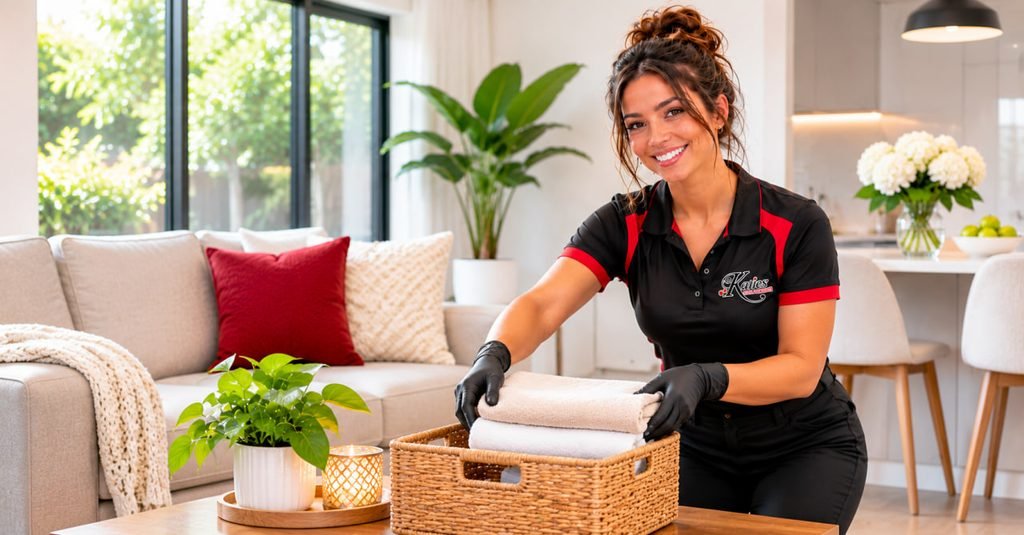
One of the most effective ways to prepare for a house cleaner is to identify personal belongings that could prevent access to floors, furniture and household surfaces.
You do not need to empty every room or remove all decorative items. Instead, concentrate on objects that are easily moved, particularly those occupying surfaces included in the cleaning appointment.
A practical preparation routine should focus on kitchens, bathrooms, bedrooms, living areas and entrances.
Clear Kitchen Benchtops and Food Preparation Areas
The kitchen is one of the most frequently used rooms in many New Zealand homes.
Benchtops often become temporary storage areas for shopping bags, mail, cooking utensils, lunchboxes, small appliances and food containers.
When you prepare for a house cleaner, start by removing items that could obstruct access to kitchen surfaces.
Consider putting away:
- Unopened groceries.
- Food containers and lunchboxes.
- Loose kitchen utensils.
- Shopping bags.
- Household paperwork.
- Medicines and supplements.
- Mobile phones and charging cables.
- Personal belongings.
- Small appliances that are not being used, where practical.
Return refrigerated food to the refrigerator and store other food items appropriately.
If your cleaning appointment includes the stovetop, remove cookware and ensure that cooking surfaces have cooled before the cleaner arrives.
You do not necessarily need to move heavy appliances such as refrigerators, ovens or dishwashers. Moving these items can create safety risks and may require specific arrangements.
If you would like cleaning behind or underneath an appliance, discuss accessibility and service inclusions with the provider beforehand.
It is also helpful to identify any delicate kitchen surfaces.
Natural stone benchtops, specialty finishes, untreated timber and certain appliance materials may require particular care. Inform the cleaner about known manufacturer instructions or product restrictions.
If washing dishes is not included in the appointment, place them in the dishwasher or organise them so that the sink and surrounding areas remain accessible.
Organise Bathroom, Bedroom and Living Area Belongings
Bathrooms contain many personal items that can make cleaning more complicated if they are spread across every accessible surface.
Before the appointment, put away personal toiletries, cosmetics, toothbrushes, medicines, jewellery and grooming products where practical.
Leave sufficient space around bathroom basins, taps, vanities and other fixtures included in the cleaning scope.
If you prepare for a house cleaner by clearing these surfaces, the cleaner can access the areas around bathroom fittings without having to handle unnecessary personal belongings.
Used towels can be placed in a laundry basket, and loose clothing should be removed from bathroom floors.
In bedrooms, focus on clothing, footwear, accessories and personal documents.
You may wish to:
- Return clean clothes to drawers or wardrobes.
- Place used clothing in laundry baskets.
- Remove footwear from areas requiring vacuuming.
- Organise bedside tables.
- Put away personal accessories.
- Clear loose items from accessible furniture.
- Secure important documents.
If changing bed linen is part of the agreed appointment, leave fresh sheets and pillowcases in an obvious location and provide clear instructions.
Do not assume that laundry services or changing bedding are automatically included.
Living rooms and shared spaces also benefit from basic preparation.
Children’s toys, remote controls, gaming accessories, charging cables and loose household belongings can restrict access to furniture and flooring.
A storage basket can provide a convenient temporary location for everyday items while cleaning is being carried out.
However, avoid simply moving all clutter into another room that is also included in the cleaning appointment. This transfers the accessibility problem rather than resolving it.
The following room-by-room checklist provides a useful starting point.
| Household area | Items to put away | Areas to leave accessible |
|---|---|---|
| Kitchen | Food, utensils, paperwork and small belongings | Benchtops, sink and stovetop |
| Bathroom | Cosmetics, toiletries, medicines and jewellery | Basin, vanity, shower and toilet |
| Bedroom | Clothing, footwear and personal documents | Floors and accessible furniture |
| Living room | Toys, cables and loose belongings | Flooring and furniture surfaces |
| Dining room | Food containers, paperwork and personal items | Dining table and surrounding floor |
| Laundry | Loose clothing and cleaning products | Accessible floor and agreed surfaces |
| Entrance | Shoes, bags and outdoor equipment | Walkways and flooring |
| Home office | Confidential documents and loose electronics | Agreed desks and accessible surfaces |
How to Prepare for a House Cleaner When You Have Valuables and Personal Belongings
Professional cleaners may need access to different rooms and surfaces throughout your property.
For this reason, it is sensible to establish clear boundaries around valuables, confidential information and sentimental belongings before an appointment.
When you prepare for a house cleaner, storing important belongings securely is a practical household routine. It protects your privacy and reduces the likelihood of valuable or fragile items being accidentally moved.
Secure Jewellery, Cash and Important Documents
Small valuable items can be easily misplaced in a busy household, particularly when they are left on bedside tables, kitchen benchtops or bathroom vanities.
Before the cleaner arrives, consider securing:
- Jewellery and watches.
- Cash and wallets.
- Passports.
- Bank cards.
- Personal identification documents.
- Important keys.
- Financial paperwork.
- Prescription medicines.
- Confidential business documents.
- Small sentimental belongings.
Place these items in an appropriate secure location rather than leaving them beneath cushions, loose among clothing or hidden within areas scheduled for cleaning.
If a cupboard, drawer or room should remain untouched, communicate this clearly.
You do not need to explain the contents of a private storage area. Simply identifying it as a restricted space is generally sufficient.
Homeowners who prepare for a house cleaner in this way can establish clear boundaries without unnecessarily complicating the cleaning appointment.
For households containing firearms, hazardous substances or other regulated items, ensure they are lawfully and securely stored and are not accessible to cleaning personnel.
Do not expect a cleaner to handle or relocate dangerous belongings.
Protect Fragile Items, Electronics and Confidential Workspaces
Fragile decorative objects and sentimental belongings may require additional consideration before professional cleaning.
Some items cannot easily be replaced, while others require specific handling or cleaning methods.
Examples include:
- Antique ornaments.
- Collectable items.
- Delicate glassware.
- Framed photographs.
- Artwork.
- Musical instruments.
- Specialist electronic equipment.
- Fragile decorative pieces.
If these belongings are positioned on surfaces included in the cleaning appointment, consider moving them yourself.
Alternatively, explain that they should remain untouched.
When you prepare for a house cleaner in a home office, pay particular attention to confidential documents, computer equipment and charging cables.
Save your work, secure important files and put away sensitive paperwork. If you are working remotely, inform the cleaner about any equipment that should not be moved or cleaned.
Electronic devices may require manufacturer-approved cleaning methods. Do not assume that televisions, computer screens, keyboards or specialist equipment are included in a general surface clean.
It is also helpful to explain whether there are workstations, monitors or connected devices that must remain in their current positions.
These arrangements help establish an appropriate distinction between cleaning household surfaces and handling personal or specialist equipment.
How to Prepare for a House Cleaner When You Have Pets or Children
Homes with pets and children often require additional planning before a residential cleaning appointment.
Young children may be curious about cleaning equipment, while pets can react differently to unfamiliar people, vacuum cleaners and changes to their usual environment.
If you prepare for a house cleaner with these considerations in mind, you can reduce interruptions and help maintain an orderly environment during the visit.
Make suitable arrangements for household pets
Inform the cleaning provider if you have dogs, cats or other animals at the property.
Explain any important instructions, particularly if an animal is nervous around unfamiliar people, sensitive to noise or likely to escape through an open door.
Depending on your pet’s needs, suitable arrangements may include:
- Keeping the animal in a secure room outside the cleaning area.
- Arranging supervision by a household member.
- Taking a dog for a walk during the appointment.
- Using an appropriate secure outdoor area when conditions permit.
- Arranging alternative care if necessary.
Choose an arrangement that is safe, comfortable and appropriate for the animal.
Do not leave pets in unsuitable spaces, exposed to extreme temperatures or without necessary water and supervision.
If a pet remains inside the home, explain which doors or gates must stay closed.
Food bowls, water bowls, pet bedding and litter trays should also be considered when preparing agreed cleaning areas.
Move these belongings where appropriate, ensuring your pet retains access to its essential needs.
If pet-related mess requires specialist attention, discuss this with the cleaning provider before the appointment. Animal waste, bodily fluids and other potentially hazardous contamination may require a different cleaning arrangement.
Plan around children and household activities
Children’s toys and belongings often accumulate in shared living areas, bedrooms and hallways.
Before the cleaner arrives, encourage children to place toys, clothing and personal belongings into appropriate storage locations.
Small toys are particularly important because they can obstruct vacuum cleaners or become difficult to locate when mixed with other household debris.
If children will be home during the appointment, arrange appropriate supervision and keep them away from active cleaning areas.
Wet floors, cleaning products, electrical cables and equipment should not be accessible to unsupervised children.
Where possible, plan activities in rooms that are not being cleaned at that particular time.
Parents working from home may also wish to discuss the order of cleaning to reduce disruption during meetings, schoolwork or other activities.
Communicate allergies and product sensitivities
If a household member has a known sensitivity to certain fragrances or cleaning products, inform the cleaning provider before the visit.
Explain the specific concern and discuss whether suitable products or alternative arrangements are available.
Do not assume that a product described as natural, environmentally friendly or low-fragrance will automatically be appropriate for every person or animal.
Similarly, inform the provider about any relevant surface restrictions or manufacturer care instructions.
Advance communication gives the cleaning provider an opportunity to assess whether the requested arrangements can be accommodated.
Access Instructions and Property Details to Share Before the Appointment
Preparing your property involves more than putting household items away.
A cleaner also needs to understand how to access the property, which rooms are included and whether there are any important restrictions.
Customers who prepare for a house cleaner should confirm these practical arrangements before the scheduled visit.
Confirm the property address and arrival arrangements
Provide the complete property address, including any relevant unit number, apartment number or driveway instructions.
This can be especially helpful for properties located within apartment complexes, shared driveways, gated developments or residential streets with limited parking.
If the entrance is not obvious, explain the appropriate access route.
Useful information may include:
- The correct property entrance.
- Apartment or unit identification.
- Visitor parking arrangements.
- Building reception procedures.
- Gate access requirements.
- Lift access or stairs.
- Whether someone will be home.
- Any agreed key collection arrangements.
For homes in Mount Maunganui or central Tauranga apartment complexes, building access and parking arrangements may require additional planning.
These requirements vary between individual properties, so check the relevant building procedures before booking.
Handle keys and security information carefully
If you will not be home, discuss an appropriate access arrangement directly with the cleaning provider.
Do not publish access codes, alarm instructions or key locations in public comments, social media posts or other unsecured channels.
Only share necessary security information through an agreed private communication method.
If temporary access codes are available, consider using them rather than sharing permanent household security credentials.
Confirm how keys should be collected, returned or stored after the appointment.
Also explain whether an alarm needs to be activated when the cleaner leaves.
These arrangements should be agreed in advance rather than left to assumptions on the day of cleaning.
Identify rooms that are included or excluded
Provide clear instructions about the rooms and surfaces included in your appointment.
For example, you may have arranged cleaning for the kitchen, bathrooms, living areas and main bedroom while excluding a home office or storage room.
Explain any restrictions before the cleaner arrives.
When you prepare for a house cleaner, a short written note can help communicate important details, especially if you will not be present during the appointment.
An example might be:
Please clean the agreed kitchen, bathrooms, living room and bedroom areas. The home office is excluded from this appointment. Fresh bed linen is on the main bedroom chair. Please keep the laundry door closed because our cat will be inside.
This provides clear instructions without requiring the cleaner to make unnecessary decisions about private rooms or household belongings.
For specific cleaning requests, confirm the tasks with the provider rather than relying entirely on an informal note.
Inform the cleaner about potential property hazards
Let the cleaning provider know about existing hazards that could affect access or safe working conditions.
Examples include:
- Loose flooring or damaged floorboards.
- Broken tiles.
- Unstable furniture.
- Damaged electrical fittings.
- Leaking fixtures.
- Sharp or broken household items.
- Ongoing renovation work.
- Areas affected by significant moisture damage.
- Restricted or unsafe access routes.
Do not conceal these concerns by covering them with household items.
Certain hazards may need to be repaired or professionally assessed before cleaning can proceed.
Cleaning is not a substitute for electrical repairs, building maintenance, pest treatment or specialist hazardous-material removal.
Preparing an occupied rental property
Landlords and property managers arranging cleaning for an occupied rental home should coordinate with the tenants before confirming access.
New Zealand tenancy rules protect tenants’ privacy and regulate when landlords and their representatives can enter rented properties.
The applicable notice or consent requirements depend on the reason for entry. Hiring a cleaner does not automatically give a landlord unrestricted access to a tenant’s home.
Refer to the official Tenancy Services property access guidance when organising cleaning in an occupied rental property.
Make sure the occupants understand the appointment arrangements, agreed cleaning areas and any preparation expected of them.
For empty rental properties, provide accurate key arrangements, property access details and information about any areas requiring attention.
Your Final Checklist to Prepare for a House Cleaner in Tauranga
A successful residential cleaning appointment begins with clear communication and reasonable preparation.
Whether you live in Tauranga, Papamoa, Mount Maunganui, Welcome Bay, Bethlehem or Pyes Pa, the following checklist can help you organise your home before the cleaner arrives.
The day before your cleaning appointment
- Confirm the appointment date and agreed arrival arrangements.
- Review the rooms included in the cleaning scope.
- Put away jewellery, cash and important documents.
- Organise loose clothing and household belongings.
- Clear unnecessary items from kitchen benchtops.
- Put away bathroom toiletries and personal products.
- Arrange appropriate care or supervision for pets.
- Identify delicate surfaces and restricted areas.
- Confirm access instructions.
- Communicate any changes to your requirements.
On the morning of your cleaning appointment
- Remove dishes or cookware obstructing agreed cleaning areas.
- Allow recently used cooking surfaces to cool.
- Put away children’s toys and loose belongings.
- Clear footwear and bags from entrances.
- Remove charging cables and other obstacles from accessible floors.
- Place fresh bed linen in the agreed location if required.
- Secure pets according to the agreed arrangement.
- Confirm any last-minute instructions privately.
- Ensure agreed rooms are accessible.
What you generally do not need to do
Many homeowners worry that their property is too untidy before a professional cleaning appointment.
However, the purpose of arranging cleaning is to receive assistance with the agreed cleaning work.
You generally do not need to:
- Vacuum every carpet beforehand.
- Mop the floors before the cleaner arrives.
- Scrub bathrooms that are included in the appointment.
- Remove ordinary dust from furniture.
- Complete the detailed cleaning you have arranged.
- Move heavy furniture without appropriate assistance.
- Purchase additional cleaning products without discussing requirements.
Your preparation should focus on accessibility, privacy and safety rather than duplicating the cleaning work.
For customers who want to prepare for a house cleaner without spending excessive time on household chores, concentrating on a few essential tasks is often the most practical approach.
If you are unsure what needs to be completed beforehand, contact your cleaning provider for guidance relevant to your appointment.
Professional residential cleaning in Tauranga and surrounding areas
Katie’s Elite Cleaning provides residential and property cleaning services across Tauranga and nearby communities in the Bay of Plenty, New Zealand.
Its published cleaning services include regular home cleaning, deep cleaning and cleaning for properties during move-in or move-out arrangements.
Customers can explore the company’s cleaning before-and-after gallery to learn more about the types of cleaning work presented by the business.
You can also visit the About Katie’s Elite Cleaning page for additional information about the business and its approach to property cleaning.
When arranging a residential clean, discuss your property’s condition, required cleaning areas and any particular preparation concerns.
Specific service inclusions, appointment arrangements and availability should be confirmed during the quotation process.
Conclusion: Make Your Next Cleaning Appointment Easier
Taking time to prepare for a house cleaner does not mean cleaning your home before professional assistance arrives.
Instead, it means clearing unnecessary belongings, securing valuables, managing pets, identifying delicate surfaces and providing accurate property access instructions.
These simple preparations can help reduce interruptions and allow greater attention to be given to the agreed cleaning requirements.
Whether you are arranging regular residential cleaning, preparing for a detailed house clean or organising cleaning for a rental property, clear communication is an important part of the process.
If you need professional cleaning assistance in Tauranga, Papamoa or surrounding areas, Katie’s Elite Cleaning welcomes enquiries about your home and property cleaning requirements.
Request a Free Quote today and discuss how to get your property ready for your next professional cleaning appointment.
Katie’s Elite Cleaning
Website: https://katieselitecleaning.co.nz/
Phone: +64 27 281 7100
Email: admin@katieselitecleaning.co.nz
1. Do I need to clean my house before a professional cleaner arrives?
No. When you prepare for a house cleaner, concentrate on organising personal belongings and making the agreed cleaning areas accessible. You generally do not need to vacuum, mop or scrub surfaces beforehand. Professional cleaning is intended to address the tasks included in your appointment, subject to the agreed service scope.
2. Should I provide cleaning products and equipment for the cleaner?
Equipment and product arrangements depend on the cleaning provider. Katie’s Elite Cleaning states on its website that it brings appropriate cleaning equipment and products. If your property requires a particular product for delicate surfaces or because of a household sensitivity, discuss this before the appointment.
3. Can I stay at home while the cleaner is working?
You may be able to remain at home during a residential cleaning appointment, depending on the provider’s arrangements. Explain whether you will be working, studying or looking after children. Discuss how to minimise interruptions and allow access to the agreed rooms without creating unnecessary disruption to household activities.
4. What happens if my house is still cluttered when the cleaner arrives?
Some household clutter is normal, but excessive belongings can restrict access to floors and surfaces. Depending on the agreed service, the cleaner may need to work around those items or discuss revised requirements with you. If extensive decluttering is needed, contact the provider beforehand to establish whether additional assistance is available.
5. How should I prepare for a house cleaner if I will not be home?
Confirm a secure property access arrangement, explain which rooms are included and provide relevant instructions before the appointment. Discuss how keys, gates and security alarms should be managed. Make sure the provider has an appropriate contact method in case questions arise while you are away.
6. Should I move furniture before a professional house clean?
Lightweight belongings can be moved if doing so safely improves access to agreed cleaning areas. However, heavy furniture and appliances should not be moved without appropriate assistance. Discuss cleaning beneath or behind large items beforehand, as these tasks may require additional equipment, time or a separately agreed arrangement.
7. Can I leave dirty laundry or dishes for the cleaner?
Laundry and dishwashing should not automatically be assumed to form part of residential cleaning. Check your agreed service inclusions before leaving these tasks for the cleaner. If they are excluded, organise dirty clothing and dishes so that floors, sinks and kitchen surfaces remain reasonably accessible during the appointment.
8. Should I open windows before a residential cleaning appointment?
Ventilation may be helpful in some circumstances, but opening windows is not always appropriate because of weather, property security, pets or outdoor conditions. Discuss ventilation requirements with your cleaning provider. If certain windows must remain closed or have damaged fittings, communicate these restrictions before the appointment.
9. What should I do if something breaks in my home before the cleaning appointment?
Inform the cleaning provider about damaged fixtures, broken glass, unstable furniture or other newly identified hazards. Keep affected areas inaccessible where necessary and arrange appropriate repairs or specialist assistance. Providing advance notice helps the cleaner assess whether the agreed work can be completed without encountering avoidable safety risks.
10. How much preparation is needed before a regular weekly or fortnightly clean?
Once you have established a regular routine, preparation may become relatively straightforward. Focus on keeping agreed surfaces accessible, putting away valuables, organising pet arrangements and communicating any changes to your home. Review the cleaning scope periodically so the preparation routine continues to reflect your household’s changing needs.